How Much Does Corporate Video Production Cost? A Complete Guide for Businesses
If you are researching corporate video pricing, you are likely asking:
How much does a corporate video cost?
What affects business video production cost?
What is included in a professional video quote?
Is video production worth the investment?
This guide breaks down the real cost drivers behind corporate video production so you can plan with confidence.
The Short Answer: What Is the Typical Cost of a Corporate Video?
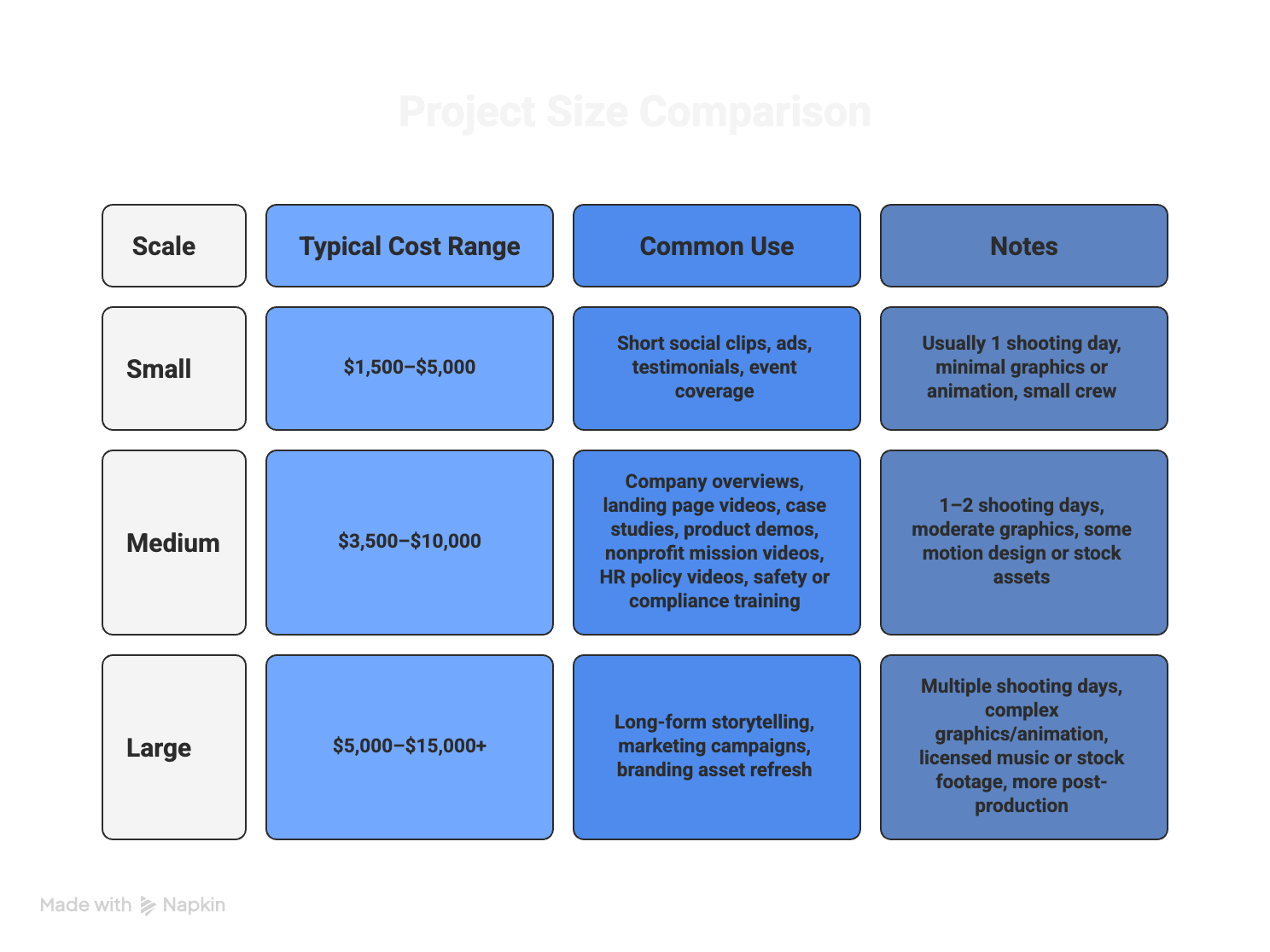
Corporate video production pricing generally falls into three broad categories: small-scale, mid-range, and larger, more complex productions.
Smaller business video projects often range from roughly $1,500 to $5,000. These typically include short social media clips, testimonial videos, simple promotional ads, or event coverage. They usually involve one day of filming, a lean crew, and streamlined post-production.
Mid-range corporate videos often fall between $3,500 and $10,000. This level commonly includes company overview videos, case studies, landing page videos, nonprofit mission videos, product demos, or internal training content. These projects may involve one to two filming days, structured interviews, and moderate motion graphics or stock assets.
Larger-scale productions typically begin around $5,000 and can quickly exceed $15,000 depending on scope. These projects may include multi-day filming, more complex storytelling, advanced motion design or animation, licensed music, and a more involved post-production process.
These ranges reflect production scope, not just video length. A polished one-minute brand video can cost more than a five-minute internal training piece depending on complexity.
For many small and mid-sized businesses, the most common investment falls in the middle range. These projects balance strong production value with practical budgets and are often handled by boutique production companies or specialized teams.
What Affects Corporate Video Pricing?
Corporate videographer pricing is shaped by three main phases: pre-production, production, and post-production. Each phase influences the overall business video production cost.
1. Strategy and Pre-Production
Pre-production is where the direction and messaging are defined. This stage often includes:
Creative development
Scriptwriting
Messaging strategy
Planning interviews or scenes
Scheduling
Location coordination
Clear planning reduces wasted production time and prevents costly revisions later. Projects that skip strategy often end up spending more in post-production.
For boutique production companies, this stage is often highly collaborative and tailored to the client’s goals. That level of involvement can significantly improve results without increasing scale.
2. Production Scope
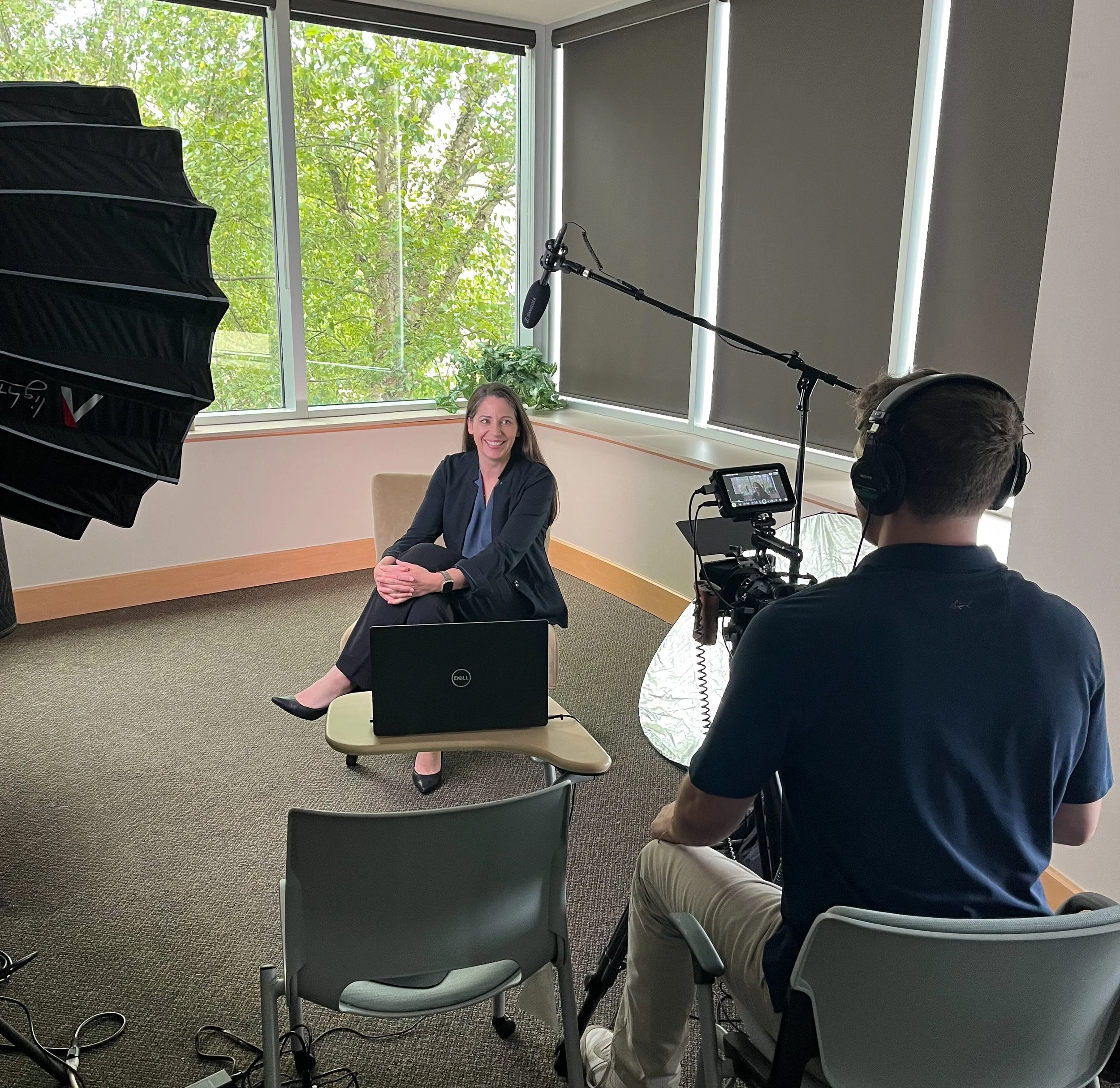
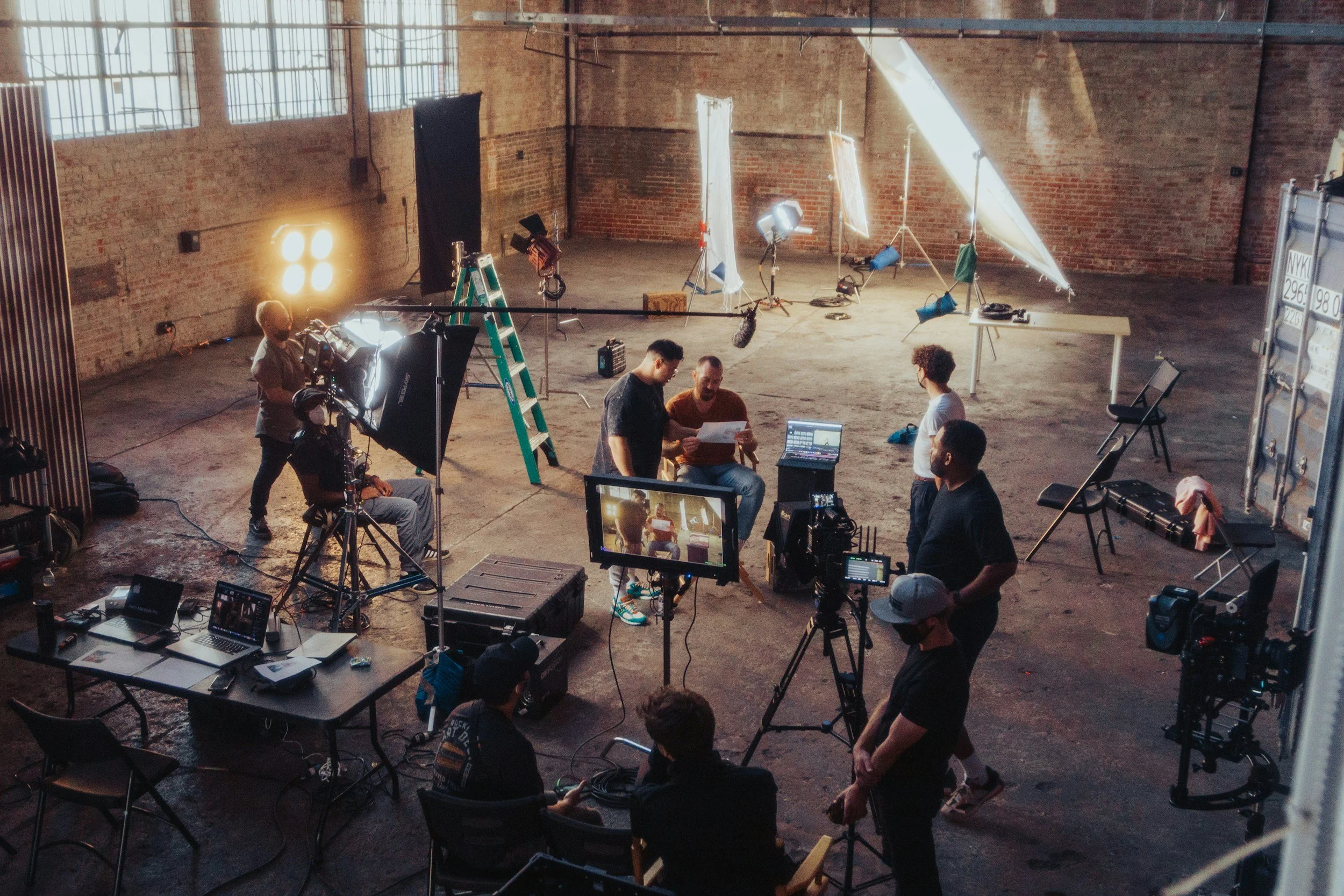
Production is typically the largest cost category. It includes:
Crew size
Camera and lighting setup
Audio capture
Locations
Talent
Production days
A simple company overview filmed in one office with a small team will cost significantly less than a multi-location brand film with actors and complex setups.
Most small to mid-sized corporate projects require:
One to two production days
A compact but skilled crew
Professional lighting and sound
Interview and supporting footage
Larger productions may involve expanded crews, specialized equipment, casting, and more extensive logistics. Those projects serve different marketing objectives and typically operate at a national or broadcast level.
Neither approach is better. They simply serve different goals and audiences.
3. Post-Production and Editing
Post-production shapes how professional your video feels. This stage may include:
Editing
Color correction
Sound mixing
Music licensing
Motion graphics
Subtitles or captions
Multiple deliverables
The cost of video editing depends on how refined the final product needs to be. A straightforward interview edit requires far less time than a brand film with layered graphics and multiple revisions.
Post-production is where much of the value is created. Strong editing can elevate a simple shoot into a polished, credible brand asset.
How Much Does a 1-Minute Corporate Video Cost?
Length alone does not determine cost.
A one-minute corporate video can start at a few thousand dollars and climb much higher depending on:
Graphics and animation
Number of locations
Talent
Licensing needs
Short videos often require tighter scripting and higher production precision. That can increase cost even though the runtime is brief. When evaluating corporate video production cost, focus on production quality and strategic purpose rather than duration.
Corporate Video Pricing by Project Type
Here is a more practical way to think about business video production cost.
Company Overview or Brand Video
Typical investment: mid-range
Common elements:
Leadership interviews
Team footage
Workplace visuals
Light motion graphics
Website and social versions
This is one of the most common projects for boutique production companies. It builds trust and strengthens your website presence. View our company overview & brand videos here.
Client Testimonial or Case Study
Typical investment: entry to mid-range
Common elements:
One filming day
Client interview
Supporting visuals
Clean, professional editing
These projects are efficient and often deliver strong ROI because they support sales conversations directly. View our testimonial examples here.
Training or Internal Communications Video
Typical investment: entry to mid-range
Common elements:
Structured scripting
Clear visuals
Focus on clarity over flashy
These projects are usually more about clarity and consistency than visual complexity. View our training examples here.
Commercial or Campaign-Level Video
Typical investment: upper mid-range to high
Common elements:
Concept development
Casting
Multiple locations
Custom graphics
Broader distribution strategy
These projects often involve agencies or larger production teams depending on campaign scale.
Why your Production Model Affects Pricing
Corporate video production pricing is influenced not only by project scope, but also by the structure of the production partner. Boutique production companies and larger agencies operate differently, and those differences naturally impact budget ranges.
Choosing a production partner influences both experience and pricing structure.
Boutique Production Company
Lean team
Direct collaboration
Flexible production scale
Focused attention
Efficient decision-making
This model works well for businesses that want high-quality work without the overhead of large agency structures.
Larger Agency or National Production Firm
Full creative department
Extensive campaign strategy
Larger crew structures
Integrated media planning
This approach may be appropriate for national campaigns or complex multi-market rollouts.
Both models serve important roles in the industry. The key is matching the production scale to your marketing objective.
What Is Included in a Corporate Video Quote?
A professional proposal should clearly outline:
Creative development
Production days
Crew scope
Equipment
Editing and post-production
Licensing
Revision rounds
Final deliverables
If you are comparing quotes, make sure you are comparing scope, not just price. Lower numbers sometimes reflect fewer included services rather than better value.
How Long Does Corporate Video Production Take?
Most boutique-level corporate projects follow this timeline:
Planning: 1 to 2 weeks
Production: 1 to 2 days
Post-production: 2 to 4 weeks
Larger productions may extend beyond this depending on complexity and distribution plans.
Clear communication and defined revision timelines help keep schedules efficient.
Is Video Production Worth the Investment?
It definitely can be if you create the video with a goal in mind. Businesses often measure return through:
Website conversion rates
Lead inquiries
Sales conversations
Engagement metrics
Training efficiency
Recruitment improvements
A strong company overview video can increase trust on your homepage. A testimonial can shorten your sales cycle. A training video can reduce repeated onboarding time.
Video is an investment, so it is important to focus on return rather than just cost. Businesses that strategically use video across multiple channels see higher engagement and conversion rates than those who do not.
When aligned with strategy, video becomes a long-term asset that supports revenue.
How to Maximize Your Video Marketing Budget
Define the goal before discussing other production details.
Plan multiple deliverables from one shoot.
Prioritize clear messaging over unnecessary complexity.
Choose a production partner experienced in your industry.
Align your video with your broader marketing strategy.
Common Misconceptions About Corporate Video Costs
It must be expensive to be good – Quality comes from planning and execution, not just high-end equipment.
Longer videos are always better – Short, focused videos often perform better for marketing and social media.
You need multiple videos at once – One well-planned video can do the work of several if repurposed correctly.
Questions to Ask Before Booking a Video Production company
Consider asking:
What is included in the quote?
Will the video be delivered in multiple formats for different platforms?
How do you handle music and graphics licensing?
Can you help plan repurposing for social media or email campaigns?
These questions prevent surprises and ensure your investment delivers maximum value.
Final Thoughts on Corporate Video Pricing
Corporate video production cost depends on strategy, scope, and intended use. The most effective approach for most businesses is to create one strong, well-planned video that can be repurposed across your website, sales process, and marketing channels.
For many organizations, a boutique production company offers the right balance of quality, collaboration, and efficiency.
If you are evaluating corporate video pricing and want clarity around what makes sense for your business, the next step is to define your goals and discuss scope before focusing on numbers.

Frequently Asked Questions About Corporate Video Cost
What is the average business video production cost?
Most small to mid-sized corporate projects fall between $4,000 and $15,000 depending on scope.
Why do video production quotes vary so much?
Differences in planning depth, crew size, creative development, and post-production complexity all impact pricing.
Does a higher budget always mean better results?
Not necessarily. The best results come from alignment between goals, message, and production scope.
Sources
Wyzowl (2024). State of Video Marketing 2024. Wyzowl. https://www.wyzowl.com/sovm-results-2024/
HubSpot (2024). 2024 Video Marketing Report. HubSpot. https://blog.hubspot.com/marketing/video-marketing-report
